You know what the hardest part of gardening is? Atleast, it is for me. Getting the seeds to germinate, and of course, dealing with pests the organic way. Germinating seeds might seem like a no-brainer, but it’s a game of patience. One that I never seem to crack for seeds like peppers/capsicum. Have you ever wandered into a nursery and looked with awe at those neatly lined seedlings in a tray? I would wonder either they have magic fingers, or there is a trick behind this 100% germination rate. I haven’t cracked the code yet, but I guess it’s the perfect greenhouse environment + fertilizer for that kinda success rate. My success with germinating seeds these past two months have been appalling. Tomato, egg plant, capsicum, cucumber, chilli, bitter gourd ~ nada. When they did germinate, I made the mistake of keeping the seedling tray outside. If I…
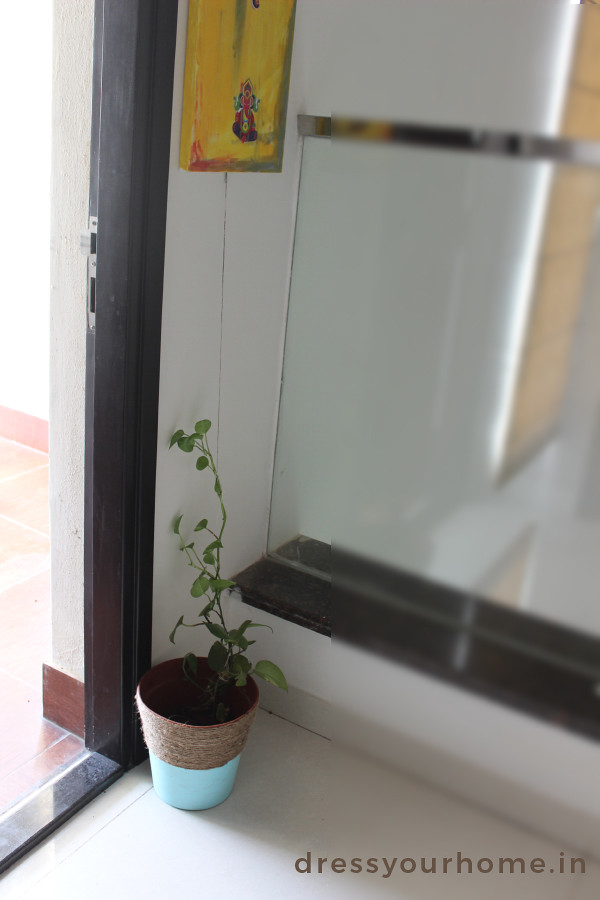
The DIY bug has bit me. The itch to do something around the house lies dormant in action with ideas just swarming in the head all the time. But, when it gets active, there’s no stopping. I like it this way because projects that should have got done months ago are all done in a week’s time. Presenting to you today, a fancy makeover to a humble plastic planter that had clearly seen better days. My mom gave me this planter; exposed to the outdoors I started noticing some cracks along the edges. I didn’t want to give it away which is usually my first instinct. I tried to revive it with a few things found around the house and bought it indoors as a holder for the pothos/money plant. It’s a simple DIY that you can get it done in less than 30 mins under a budget of Rs.150.…
Gardening is like therapy to me. Tending to the grass, weeding, pruning plants and checking on the health of vegetable saplings on the terrace is akin to meditation. But, one that is interrupted by the unsightly white insects aka aphids or mealybugs on the back of the leaves. Here are three tried and tested natural ways to get rid of aphids. Of late, with the onset of monsoon, pests and aphids infestation is what I’m grappling with most of the time. Aphids and mealy bugs first appear on hibiscus and soon spread to the other plants. But, what I discovered yesterday terrified me. The papaya had a stunted growth for a few weeks. I accidentally checked the underneath of leaves. No green patch of the leaves was to be seen; it was snow white fully covered with mealybugs. I forgot to take pictures. Plants infested with pests so far: HibiscusFrangipaniIxoraPapayaScale…
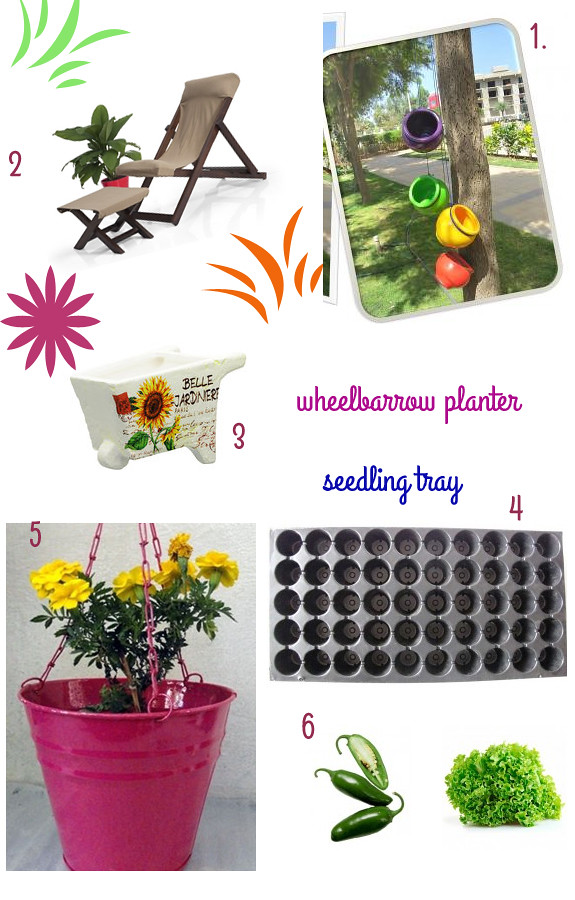
What would you need to set up a balcony garden from scratch? That’s the thought that crossed my mind as I was looking for some affordable railing planters before deciding on making my own. Iron brackets are so hard to come by, and even if they are available online, they are usually priced ridiculously high. Working on this theme, this week’s post centers around setting up your balcony garden replete with essentials such as planter, potting medium, seedling tray and of course, seeds. The only outlier is the deck chair in terms of price. I’m fond of easy chair, but you could replace it with a cheaper alternative like a couple of cane modas with comfy cushions for seating. 1. Colorful hanging terracotta pots for Rs.650 2. Walnut finish deck chair and foot stool from Urban Ladder for Rs.5499 3. Wheelbarrow planter for Rs.295 from Zansaar 4. Seedling tray from…
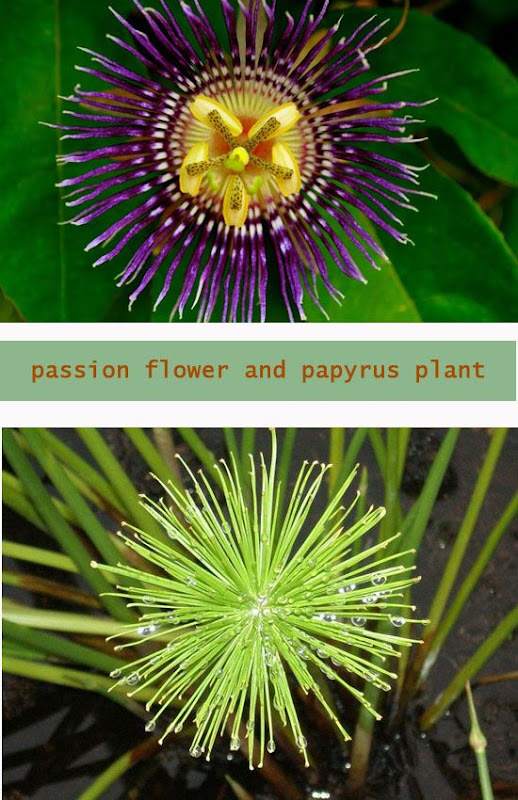
I love winter in Bangalore. From October through April, my south facing balcony gets a good amount of sunlight that does a world of good for my plants. Flowering plants like petunia, glaxonia do well this time of the year. Bougainvilleas of all colors have been blooming in my apartment garden. We had a sprawling passion flower creeper at the entrance and every morning when I dropped by son to school, we would stop by for a few minutes to smell and admire the blooms. Most would be in the bud stage but by afternoon, they would all be in full bloom. The plant strangely dried during the last fortnight and was completely cut off yesterday afternoon. It was sad to see it go. Coming back to bougainvillea, it is a hardy plant that requires minimal watering during the monsoon/winter months. Place it where it gets a good amount of…
This is a virtual tour of Vriksha Nursery in Mumbai.
Every store owner I’ve spoken to has exhibited that one quality that sets them apart and keeps them going day after day: passion. But, at Vriksha, it was a tad different. The e-mail exchange was full of life, energy to go on, and enthusiasm to do more – it felt as if I were there in Mumbai amidst the greens. I felt happy knowing Vriksha. Yes, happy, was the word I was looking for to describe my virtual experience of Vriksha.
I wrote to Shaan Lalwani, horticulturist and nurturer of Vriksha nursery. His parents created this green heaven in Mumbai 34 years ago. Yes. 34 years. Gardening is close to my heart and I know for many of you too. There’s tons of priceless information, here, in this post from Shaan, that comes with experience. So soak it all up and let’s put it to good use in our gardens.
Snippets of my conversation with Shaan:
A little background about Vriksha in Shaan’s words: “Vriksha has 100 different herbs fruits and vegetables (local and exotic) all for sale at the nursery. The idea here is to make gardening interactive: carnivorous plants, insect repelant plants, edibles, aroma plants etc. I’m 26 years old and thankfully have a team of 45 people willing to try (sometimes fail) new things.
Ikebana is the Japanese art of flower arrangement. Mom is into the 6th year and next year she heads to japan to give her teacher level exam under the grandmaster in japan. She arranges flowers in offices, hotels, events in mumbai and thankfully she still after 25 years in the line still wants to do something diffrent…”
1. What would be the ideal potting mix – soil and cocopeat and in what proportions for a balcony?
Every nursery has their own little concoction when it comes to garden soil ….some say 50-50 some say 70-30…our soils at the nursery are a family recipe 30-mud-30-cocopeat-30-coal-10 sand(leached). Reason we do that is it keeps the soil light and airy…also I’ve been playin with the idea of wood chips in india for a while results are awaited …
How was your weekend? After months of being holed up in the house on weekends, we had a great time on Saturday. The title for this post, “Life on the Balcony”, is a term I’ve borrowed from Fern Richardson of the award winning blog on container gardening. I’m surprised how I’ve missed this blog for so long. Worth reading every post. Last Friday afternoon was well spent cleaning up the balcony, scrubbing the floors, rearranging the pots and re-potting some creepers with a lot of help from my five-year-old son. Did I mention that we started using used coconut shells as a seedling tray? Worked well for dhania and other herbs. The ratio has shifted generously towards vegetables and herbs in our garden now – betel leaf, curry leaf, tomatoes, tulsi , spinach and coriander. Anyways, what prompted me to write this post was an awesome balcony I saw on the…
Don’t you think “going green” has suddenly become so easy? I mean, with so many resources available and widespread awareness, it’s a lot more easier now to procure and nurture plants. I discovered Wingreens, an initiative by Anju Srivastava of Women’s Initative Network (WIN) that retails herbs and oxygenerator plants at malls.
You may already own some oxygen generating plants in your balcony garden without realizing that the greens are doing more good in cleaning up the air around you than you ever imagined.
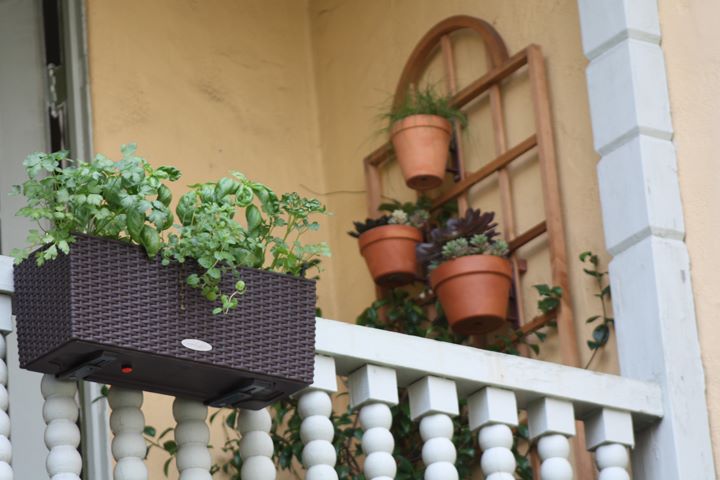
The herbs come in fancy planters, so no initial work is needed around them, if you are short on time. Just nurture them regularly by watering and ensuring they get ample sunlight. And see your dream of having a herb garden come true.
Before I sign off for the weekend, I wanted to share with you some inspiring ideas for decorating your garden. This month’s Better Home and Gardens has some lovely ideas for creating a relaxing nook in your garden. Don’t worry if you don’t live in a sprawling bungalow with a huge garden. With a little creativity you can create one in your balcony too. I saw the fuchsia bench on BHG’s facebook page and fell in love with it. If you have a old cane chair, how about painting it in this color. Add a little drama to the setting with a water fountain or urn. Isn’t this a perfect setting for a summer evening? Image courtesy: June 2011 images from Facebook page of Better Homes and Gardens and digital version.
Tending to balcony garden has been long overdue. I lost some plants this summer to pests including my favorite orange hibiscus which has flowered maniacally over the past two years. Sometimes, the white sticky pest you see on these plants come from the neighboring infected ones or there could be something wrong with the soil itself. In this case, it came from the adjacent white hibiscus. It was a busy gardening day yesterday. Got half a dozen plants from the Jeevan Bhima Nagar nursery. If you haven’t been in a while, it’s a good time to drop by as the nursery is well stocked with flowering plants, edible herbs and vegetables. I picked a 7-layered scented jasmine, large red hybrid hibiscus, Ixora red, okra/ladies finger/bhindi, hilli, and tulsi. Repotted them myself so it was quite some task but loved every bit of it. Redecorating the balcony is in store over…




 herb
herb