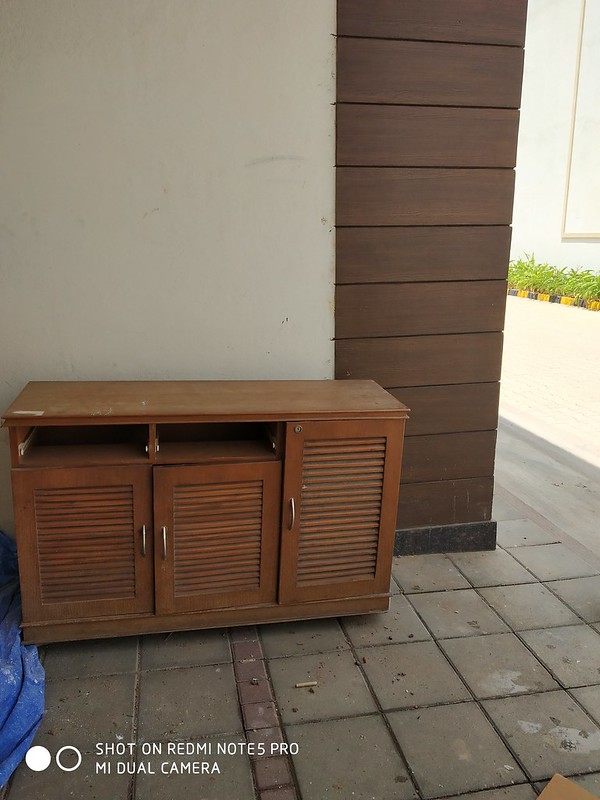
We bought this wooden cabinet as a multipurpose storage unit to store footwear, newspaper, and odd hardware tools. This was one of our first purchases after we moved into our first home. To be honest, I had zero understanding of decorating, interior styling, or what to buy for what. If there was a dire need, we bought that piece of furniture so long it fulfilled its function and our not-so-deep pockets. Form had not entered our lexicon. So, yes, our home was a concoction of disparate elements from tan sofa to geometric tiles. But, you hold some things dear, when they are reminiscent of good ole memories of your first home. So, this piece came with us despite our best efforts to sell it on Quikr. Make no mistake, it got sold two times, and both times it was returned and money refunded to the buyer due to a technical…
I have taken off a few days from work. This break has been good, rejuvenating, and most importantly, given me the time to work on several home projects that I had put off for years. So every day, I have been working on a home improvement project; it’s refreshing, and raring to go back to work. The project I worked on today was to restore a Ganesha wood statue. We bought this Ganesha statue at an exhibition in Safina Plaza in 2004 on Ganesh Chaturthi day; it wasn’t planned. We LOVE the statue and would never to part away with it. The issue is within months of buying we noticed cracks and soon realized it was infested with termites. Over the years, I have tried several remedies to get rid off the termites but to no avail. The longest termite-free period has been over the past 1 year and I…
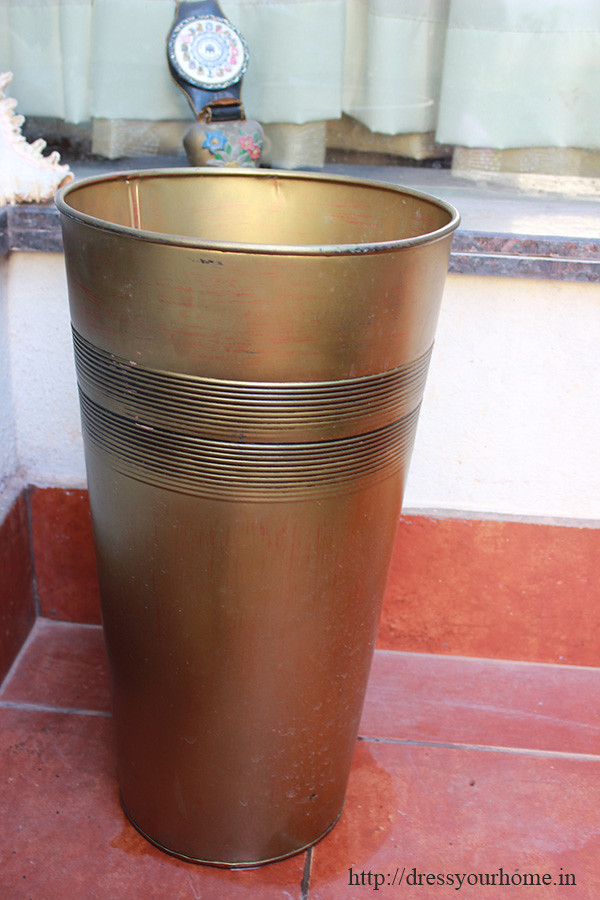
Encouraged by Preethi, I am going to give this DIY series a day, a try, at least on weekdays. Today, I take you through a painting project that promises a splash of color and instant facelift. A few weeks ago, I spotted a set of these tall planters on sale and got them home. They had clearly seen better days. I toyed with the idea of painting them lime green and lemon yellow to complement each other. But, both metallic colors were not available at the Asian Paints stores. So I bought the sample cans of orange and yellow (250 ml). Materials required: 1. Metal primer. 2. Brush. Though spray painting is the best for such surfaces. 3. Thinner to thin the paint and clean the brush. 4. Sample cans of enamel paint. These are solvent-based paints and not water-based. For such small surfaces, sample cans would be more…
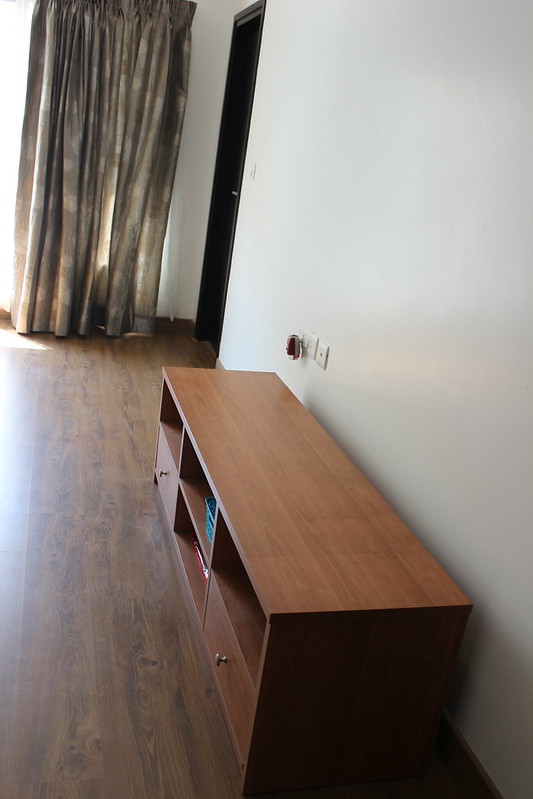
We finally moved into the new house. It’s been two weeks. This was the first weekend in months when we had some time (a few hours) on our hands with nothing to do. That was a strange feeling. After you’ve been running around tirelessly for months for everything from hinges and laminates to painting and furniture, there is a sudden vacuum. Oh, we are not all done. There are still many, many pending items to be crossed off from the list. But, this momentary break is essential. In the meantime, Asian Paints got me excited about something I have been wanting to do for a while. One of my long pending projects has been to revamp a TV cabinet to give it a new look. This TV cabinet from Damro is in exceptionally good state. Only thing is I don’t like the laminate finish anymore after seeing it day in…
You know this is the busiest time of the year for paint companies with chock-a-block calendar? This is when most people give their walls a fresh lease of paint before the festive and wedding season begins. The most popular posts on this blog – on Asian Paints and Surprise your Spouse have been trending for the past two months.
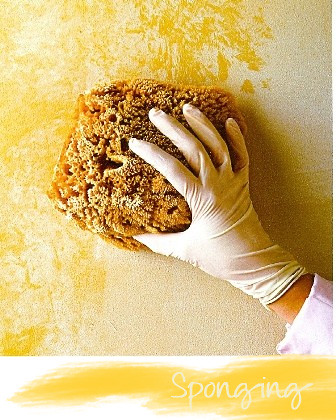
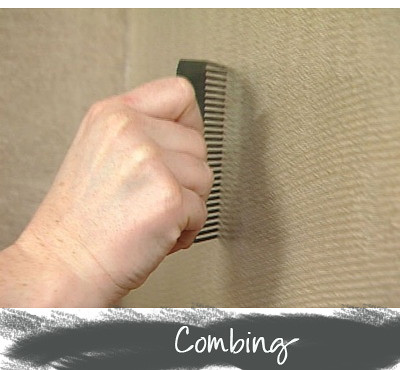
A special effects (textured paint) on a ~ 100 sq. ft wall can cost upwards of INR 5,000. But, you don’t have to spend a fortune if you are proud of your DIY and not too worried about a professional finish. Sponging, combing, brushing, dapple, ragging, weaving, spatula and crinkle are some of the special effects on offer.
The intent of this post is to show that you can do it yourself at home. For steps on how to do it, this is a great starting point. If you’ve never done a painting job before, I’d suggest you get started with these handy tips.
For all the textured effects, choose a base color and another foreground one that stands out as you can see below.
See, how easy it is? How touch can stretching a comb over wet paint be especially if it leads to a stunning visual effect?
Freshly painted walls have a welcoming and positive effect on a home. There’s no research to suggest how often you should get your house painted. But, it’s good to give a space a fresh coat of paint once every three years. Now, there are two kinds: a full job, and a coat. A full job is one where you scrape the entire surface, apply putty, and then paint. A new coat is where you apply two coats of paint assuming the primed surface is in great condition. From a clean surface to unblocking energies, there are several benefits of painting your interiors every four years. When choosing which paint to go with, here are a few factors you may want to consider. There are several paint brands available these days. But, the options narrow down to the big three in the Indian market: Asian Paints, Nerolac…
Are you considering getting your house painted? Other than the price and timeline, what criteria do you look for? Call it circumstantial or luck, I’ve got one house painted (including supervising my parents’) each year for the past three years – all from different vendors. Some factors keep topping the list. So, I thought I would put them together if you are doing it for the first time. Factors I consider before painting a house: 1. Odour free paint – top of the list. Irritated by the paint smell in some neighbor’s house 200 meters away? Or, have a child at home? Then I suggest you go water based emulsion for walls and the doors instead of the standard oil based paint even though they are a little expensive. 2. Timeliness – you get a fair idea of whether the painters will complete the work within the deadline promised within…
It’s Sunday afternoon. Lunch done. The house is airy, smells fresh and there’s light all over streaming in through the windows: for a change. And I’m loving it. Here’s a teaser of the colors from the pictures below that adorn the walls now.
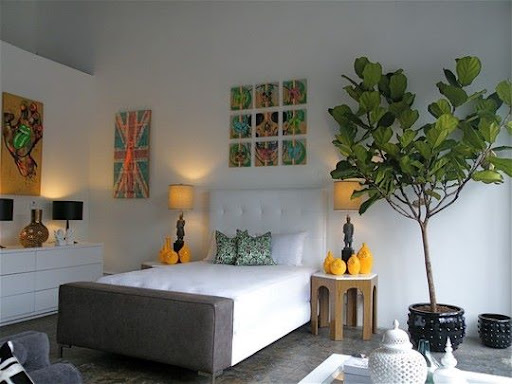
This picture has most of the colors used in the house.
It is time to talk about the surprise. 2010 drew to a close on a good note and December was been a fabulous month. Before I begin, wish you all a very Happy New Year. And thank you for stopping by, asking for suggestions and all your kind comments.
There was a time, year 2004 to be precise, when I was hooked onto the makeover and event series on TLC. You know The Wedding story, The Baby Story, The Home Makeover story and such…I would watch back to back episodes. Have you seen those home makeover surprise episodes when a spouse goes away for a weekend? And the husband/wife along with the TLC team renovates the yard/room beyond recognition. When the spouse returns, he/she is in for a HUGE surprise. Imagine the adrenaline rush!
The dream came true. It all began in November end as part of “Surprise your spouse” campaign for Asian Paints. It was like a dream come true. In a way, it was a torture for I couldn’t tell my husband or anyone about it for nearly 3 weeks :)
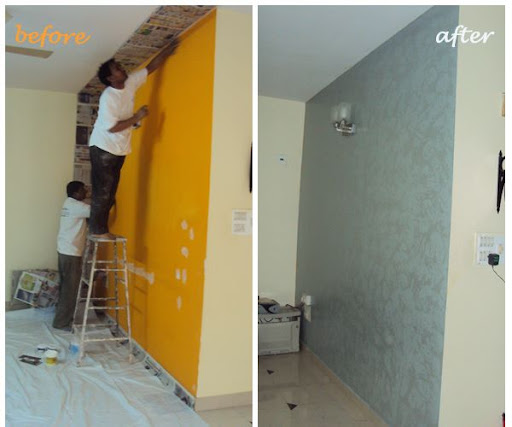
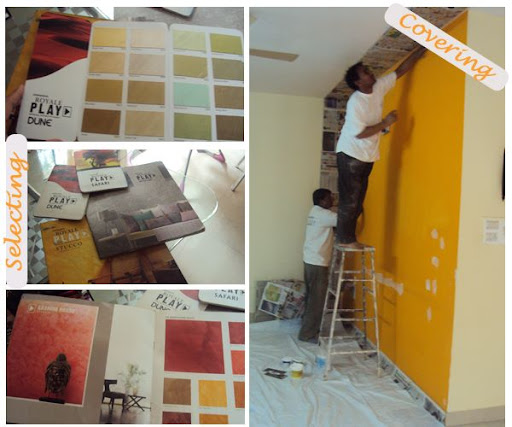
As per the campaign, I could choose a wall to be painted in a color and texture of my choice and Asian Paints Home Solutions would paint it. This had to be done when the husband was away on work. Everything feel in to place in the first week of December as my husband was away on a business trip for 3 days giving us enough window to execute the whole process at ease. I was as thrilled as my son when he gets a new RC helicopter. Alright, more about Royale Play and the process now…
Color and texture selection:
This is perhaps the most important step in the whole process.A lot has been said and written about color selection for walls – furniture, wall decor, artifacts, lighting, furnishings play a critical role. If youdo not intend to change the rest, then it is wise to choose a color that blends well with furniture and furnishings.
We are in the process of re-doing our home in parts. After a bright orange drawing room, for two years, I was game for a more subdued and neutral color, preferably monochromatic. I wanted to bring color to the room through vases, flowers and rugs. This limited my choice of colors and the selection process easier. But you never know how it would look once done. This is where the experts help. The Asian Paints’ team leader vouched that silver-Aluminium dapple gives a royale look.
To be honest, even after selection, I was skeptical for two reasons. One, it is easier to transform a room and surprise everyone by painting a focus wall in the darker shade. Though a standard and fail-safe approach, it is not novel anymore. in our case, the hardest part was to move away from a darker shade and still make an impression. Two, as I said before, one can never be sure what looks good on paper will stand out in reality as well.
In continuation of yesterday’s post, I’ll describe the process that you can apply to paint any wooden furniture. So, if you’re game for some hard work, let’s get started. Preparation: 1. Identify the piece of furniture you want to paint. And, be convinced why you want to paint. Some pieces of furniture look best in their natural form. For instance, you don’t want a yellow paint over a beautifully carved teak wood cabinet, right? 2. Come up with a color scheme. Do a bit of research and use your design gut to finalize colors. To add zing to bare white walls, brightly painted furniture is a good idea. But if you have a thematic wall, already, adding more color wouldn’t bring the object to focus. In this case, a neutral color would work well. Things you’ll need: Now that we’ve settled on the colors, let’s go do some shopping. I…